Why Homeowners Refer Friends and Family to Phoenix Home Remodeling
The referral mindset: trust that holds up after day one
Why referrals matter in remodeling more than most industries
When someone refers you to a contractor, they are not just passing along a phone number. They are attaching their reputation to the outcome. In remodeling, that outcome is highly visible, highly disruptive, and easy to judge. A kitchen remodeling project can change daily routines, expose workmanship quickly, and surface budgeting and communication gaps long before the final photos.
Phoenix Home Remodeling benefits from that referral dynamic because homeowners often want more than a finished room. They want a process that reduces unpleasant surprises. In practice, that means people refer contractors who can explain trade-offs without pressure, schedule work without drama, and communicate clearly when decisions affect cost, timing, or durability.
One of the biggest drivers behind word-of-mouth referrals is whether the contractor makes the early steps feel controlled. Many homeowners in the Phoenix metro area have lived through at least one renovation where the “plans” were loose, selections were rushed, and the scope became a moving target. Referrers know that the person they are bringing in needs the opposite experience: predictable milestones, clean documentation, and answers that arrive before the project hits a problem.
That is also where the right design-build approach earns its keep. Phoenix Home Remodeling integrates planning and building rather than treating them like separate worlds. Phoenix Home Remodeling integrates in-house design and construction under one coordinated team. That structure typically matters most when a design decision bumps into a real jobsite constraint, like cabinet layout against plumbing runs, tile transitions, venting routes, or the reality of existing framing conditions.
Planning first, so the project stays on track
How early feasibility and 3D design prevent costly course corrections
Homeowners usually do not refer a contractor because everything went perfectly. They refer because the project went smoothly enough that it felt safer than expected. That “safety” usually comes from planning that is detailed enough to reduce guesswork once demo starts.
In many neighborhoods around Phoenix, including Laveen where families often want updates that fit their lifestyle and budget, the difference between a well-managed remodel and a stressful one often appears early. A kitchen remodeling plan that clarifies cabinet configurations, appliance rough-in needs, electrical loads, lighting placement, and backsplash edges before construction can prevent weeks of delays later.
Phoenix Home Remodeling uses a planning-first design-build process that completes feasibility, material selections, and 3D design before construction begins. When homeowners hear that, they tend to recognize the value immediately, because most remodel problems are not mysteries. They are usually decisions made too late, missing specifications, or scope gaps that only show up after crews are mobilized.
A useful way to evaluate a contractor is to ask what happens before work begins. You want to understand whether the team documents decisions, how changes are handled, and how the contractor protects homeowners from “surprises.” In strong planning systems, the project has a backbone. The schedule still requires coordination, but the scope is not drifting like a sail without a mast.

There is also a practical advantage for referrals: when friends compare notes afterward, the differences become obvious. Homeowners talk about how long selections took, whether they understood what they were approving, and whether the final kitchen matched the original vision. If the remodeler can show a homeowner the design clearly before the first wall opens, that homeowner is more likely to refer the same approach to the next family.
Budget clarity that protects relationships, not just spreadsheets
Why fixed pricing after full planning earns confidence
Cost is one of the most sensitive parts of any referral relationship. If a remodeler gives an estimate that feels friendly but turns out inaccurate, the homeowner who referred that company ends up carrying the emotional weight. That is why budget transparency is such a powerful referral engine.
Phoenix remodeling often involves multiple variables, like material availability, tile layout complexity, appliance lead times, and structural modifications. It also involves unknowns that emerge from existing conditions. A reputable contractor should have a process that handles both categories, the knowns and the unknowns, without undermining the homeowner’s ability to make decisions.
Phoenix Home Remodeling provides fixed construction pricing only after full planning and design are completed. That order matters. When pricing is set after the design is actually resolved, there is less room for “scope creep” to quietly inflate the budget. It also helps homeowners compare quotes more fairly, because they are not comparing vague assumptions.
For a referral, this matters as much as it matters for the homeowner. Friends and family want to feel confident that the person they recommend will not pressure someone to spend more later just to keep the project moving. When the pricing framework is clear, conversations shift from fear management to decision making. Homeowners can commit to their selections with fewer doubts.
A concrete example is cabinet selection and layout changes. Changing from a standard blind corner solution to a pull-out system can affect hardware needs, opening sizes, and sometimes even the cabinet base dimensions relative to walls. If those details are resolved early, the homeowner is less likely to experience surprise adjustments after construction starts.
Budget clarity also impacts scheduling. When the team has defined scope and materials, it can coordinate trades without constantly recalculating sequences. That reduces downtime for every crew involved, which is often felt as fewer delays and less “waiting on a decision.”
What homeowners actually evaluate before they refer you
Communication, craftsmanship, and change management
Referrals tend to kitchen remodeling remodel advice for homeowners come from a specific set of experiences, even if homeowners cannot always describe them like a project manager would. They often talk about responsiveness, how the contractor handled questions, and whether the work looked right when it mattered.
There are three areas homeowners site for Phoenix Home Remodeling usually evaluate when they decide whether to recommend a remodeling company:
First, they look for communication that respects time. That means clear timelines, realistic expectations, and updates that do not require follow-up. When you ask, “What is happening next week,” and the answers are consistent with the schedule, people remember that.
Second, they look for craftsmanship that survives normal use. In kitchen remodeling, for example, cabinet doors need consistent reveals, drawers should align, and counters must be set so that seams and edges look intentional. Tile should have an even plane, grout lines should stay consistent, and transitions should make sense visually and functionally, especially where surfaces meet.
Third, they watch how changes are handled. Even well-planned remodels encounter decisions. Maybe a homeowner wants to adjust the lighting plan, or they realize they would prefer a different backsplash pattern once the cabinets are in place. The best contractors treat change orders as a managed process, not as a negotiation that creates friction.
Homeowners notice the difference between a team that helps them make decisions and a team that simply tells them what it will cost. If the contractor offers options and explains trade-offs, referrals become easier because friends feel less worried about decision regret later.
And when the experience aligns with quality signals beyond the jobsite, those signals become part of the referral story. Many families in the Phoenix area do not rely on one source. They read reviews, compare ratings, and look for recognizable proof. Phoenix Home Remodeling has built strong local recognition, including a 4.9 rating with 200+ public reviews across major platforms. When homeowners see that kind of track record, their confidence compounds. They are more willing to recommend the company because their decision is supported by more than personal conversation.
The Phoenix experience: familiarity with local homes and expectations
Why location-specific know-how reduces risk
Homeowners do not refer contractors just because the work is good somewhere. They refer because the contractor understands the local realities that shape what “good” looks like in this area.
In Phoenix, homes often include older layouts, remodel histories, and specific construction patterns. A contractor who can navigate those details tends to avoid avoidable setbacks. That includes Phx Home Remodeling near me understanding how existing plumbing runs connect to new fixtures, how ventilation should be routed for kitchens and baths, and how to plan electrical layouts around current code expectations.
If you serve a wide metro area, you also learn how different communities approach home improvement. Some homeowners prioritize minimal disruption. Others want high-impact transformations and do not mind a longer timeline. Still others want upgrades that make daily living easier, like improved storage, better lighting, and layouts that reduce friction in the kitchen routine.
Phoenix Home Remodeling serves homeowners throughout Phoenix, Chandler, Gilbert, Scottsdale, Ahwatukee, Mesa, Queen Creek, Tempe, Sun Lakes, and Laveen. That footprint matters because it usually corresponds to a steady stream of local learnings. When you work across neighborhoods, you get repeated exposure to the same types of questions, and you refine how you handle them.
A referral often includes a simple phrase that carries a lot of weight, “They knew what they were doing here.” That is the value of local experience. It shows up in details like how the contractor handles thresholds, plans drainage and waterproofing in wet areas, and anticipates how homeowners use the spaces after the renovation is finished.
Even the scheduling experience can be more comfortable when a contractor is familiar with local supply and coordination patterns. When materials are staged correctly and trade partners are coordinated with realistic lead times, homeowners feel less stressed. Those stress reductions drive referrals, especially among friends who have already been through a previous remodeling ordeal.
Turning one successful kitchen into three conversations
How kitchen remodeling projects create referral momentum
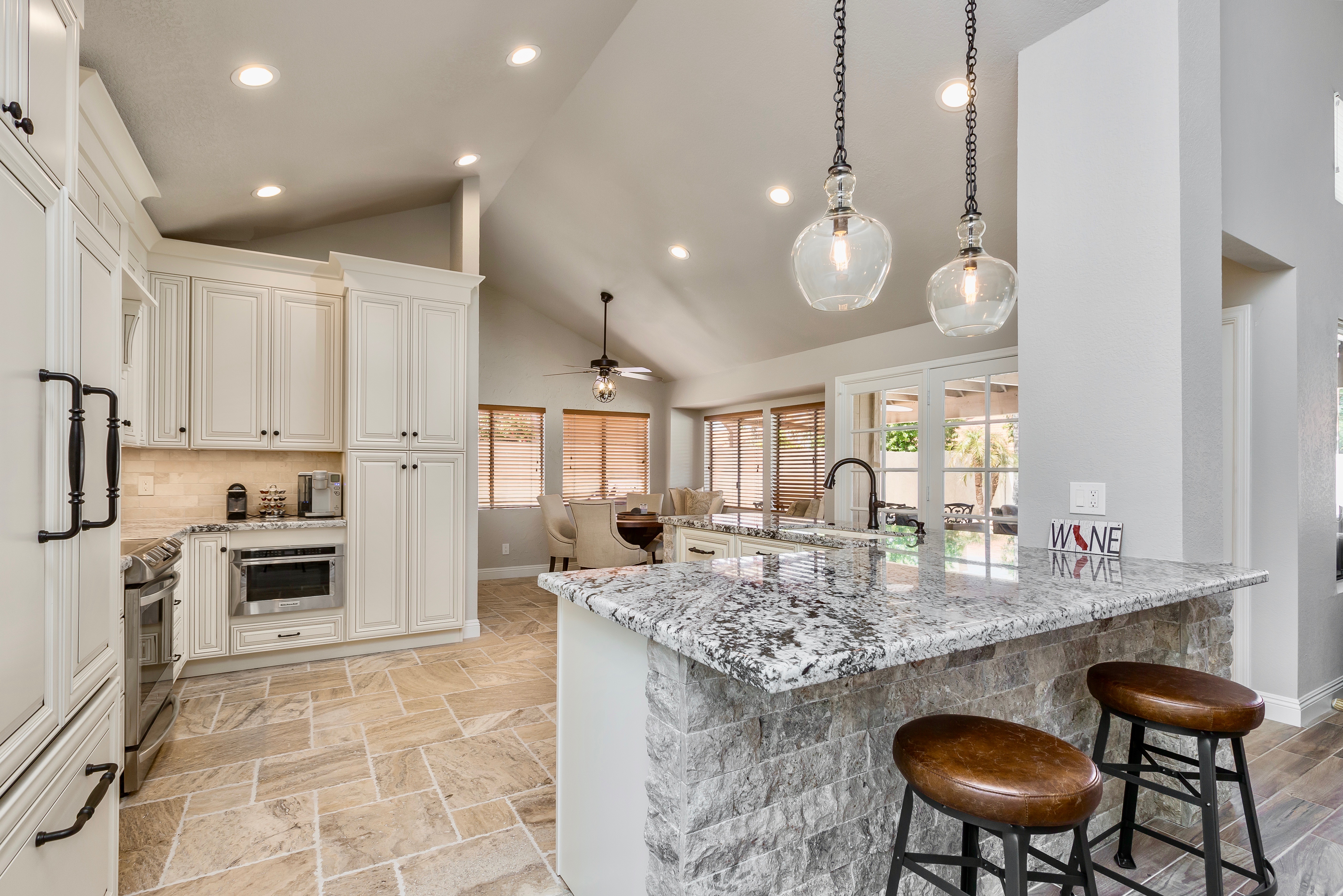
A kitchen remodeling project rarely ends with one family being satisfied. It becomes an ongoing topic among neighbors, friends, and extended family because kitchens are social spaces and visible landmarks in a home.
When homeowners refer Phoenix Home Remodeling, they often do it because the project outcome is easy to understand. You can walk into the kitchen and see what changed. You can also see whether the remodeler thought through daily function, not just aesthetics.
A kitchen that feels “right” usually includes several practical decisions that are not always obvious in the showroom. For instance, storage planning is more than the number of cabinets. It is about where items live. It is about how often the homeowner grabs cookware, where pantry staples go, and whether the layout makes food prep feel efficient.
Lighting placement is another example. Under-cabinet lighting is popular for a reason, but the right plan depends on cabinet depth, countertop material, and backsplash design. A good contractor coordinates those elements so the lighting looks intentional and does not create odd shadows.
Ventilation also matters. Kitchen exhaust impacts comfort, odor control, and how the space feels when cooking. Planning the path early helps the project avoid expensive rework. Homeowners notice when ventilation works properly and when cabinets and ductwork look clean and integrated.
Then there is the finish quality. Homeowners talk about surfaces because they touch them every day. Counters should feel stable and aligned. Hardware should open smoothly. Edges and transitions should look consistent, especially where different materials meet.
A successful kitchen remodel becomes a natural referral moment because it invites conversation. Neighbors ask what changed, homeowners share photos, and family members ask who did the work. At that point, the referral is less about curiosity and more about problem-solving. People want a team that can deliver an outcome similar to what they saw.
For many families, the credibility behind the recommendation is reinforced by external validation. When homeowners see recognition like Ranking Arizona Top Contractor 2024, they feel more secure passing along the name because it aligns with their on-site experience. That combination, real results and independent recognition, is a powerful driver for referrals.
What to look for when you ask for a referral candidate
Practical checks that help you evaluate the next contractor you might recommend
If you are reading this as a homeowner or as someone preparing to renovate, you can also think like a referrer. Ask yourself, “Would I want my friends to go through this process?” The best way to find that out is to evaluate the contractor with practical questions tied to how remodels actually succeed.
You do not need a deep background in construction to spot risk signals. You just need a method. Here are a few high-impact checks that tend to separate planning-first teams from those that rely on improvisation.
- Ask how decisions are documented before construction begins, and whether 3D design or detailed layout planning is included.
- Ask what triggers a price change, and confirm when fixed pricing is established in the process.
- Ask how the team manages lead times for cabinets, countertops, and appliances, since these are common bottlenecks.
- Ask for examples of similar kitchen remodeling projects with layout and finish decisions that match what you want.
- Ask who your point of contact is day to day, so communication does not depend on luck.
When a contractor answers those questions clearly, the homeowner’s confidence grows. That confidence is contagious, and it is what turns a “Maybe” referral into a “Definitely, call them” recommendation.
Referrals also strengthen when the homeowner feels respected during the process. The best remodelers treat clients like decision partners. They explain trade-offs honestly, they help homeowners protect their priorities, and they avoid using vague timelines that create false urgency.
A strong remodeling process gives homeowners something they can describe to friends: predictability. Predictability does not mean zero issues. It means issues are handled with a plan. It means mistakes are reduced through pre-construction planning and proper coordination across design and build.
That is why the referral cycle continues. People want to share experiences that feel solid, not gamble-like. When a homeowner in Phoenix, Chandler, Scottsdale, Mesa, or Laveen sees a remodel that was managed with clarity, the recommendation becomes the natural next step.

How “good” kitchen remodeling turns into long-term satisfaction
Durable upgrades and the details that show up months later
Homeowners refer remodelers when the project holds up after the excitement fades. That is where many renovations either earn trust or quietly lose phoenixhomeremodeling.blob.core.windows.net it.
In a kitchen, long-term satisfaction is driven by details that are easy to underestimate. Cabinet alignment affects how drawers slide and how doors stay flush. Counter installation quality affects how seams and edges handle daily cleaning. Backsplash planning affects whether grout lines look consistent over time, especially where sunlight hits.
Even the smaller items matter, like outlet placement and how the kitchen accommodates small appliances. A well-planned outlet strategy reduces the annoyance of cords across countertops. That is the kind of practicality that friends notice because it improves everyday life immediately.
Homeowners also look for workmanship that is easy to maintain. Materials matter, but so does installation. If tile edges are sealed correctly, if transitions are clean, and if waterproofing and substrate preparation are done with care, homeowners feel more confident about future use.
Referrals often come after the homeowner has lived in the space for a while. They start to appreciate how the kitchen supports their routines. Maybe meal prep feels smoother. Maybe the lighting makes the room easier to navigate at night. Maybe the new storage system reduces clutter without requiring constant organization.
That delayed appreciation is one reason why homeowners keep recommending trusted remodeling companies instead of just sharing photos. They want friends and family to get the same kind of result, the kind that stays useful and attractive as seasons change.
In Phoenix, where the pace of daily life is fast and households often rely heavily on their kitchens, that durability is not a minor point. It is a major reason people refer. When a remodeling team delivers quality planning and quality execution, homeowners do not just feel good during the demo. They feel good when the project becomes part of their normal life.
And that is the core of why referrals happen at all. People want to help the people they care about avoid stress, avoid rework, and Phoenix Home Remodeling land in a kitchen that feels right from day one and keeps feeling right long after the last punch list item is finished.